If you’re searching for a clear, no-nonsense budgeting apps comparison, you’re likely trying to figure out which tool will actually help you take control of your money—not just track it. With dozens of apps promising smarter insights, automated savings, and better financial habits, it’s hard to know which ones truly deliver and which ones just look good in ads.
This article breaks down the leading budgeting apps based on features, ease of use, pricing, security, and long-term value. Whether you’re focused on cutting monthly expenses, improving cash flow, planning investments, or staying tax-compliant, you’ll find a side-by-side evaluation designed to match real financial goals with the right digital tools.
Our analysis is grounded in established financial planning principles, practical budgeting frameworks, and hands-on review of each platform’s capabilities. The goal is simple: give you clear, actionable insight so you can confidently choose a budgeting app that supports smarter financial decisions—not just better spreadsheets.
Managing money is already complicated. Add hundreds of apps promising to “fix” it, and you get paralysis by analysis (like standing in the cereal aisle too long). This guide simplifies the budgeting apps comparison so you can choose with confidence.
How to Pick the Right Budgeting App
Here’s a practical filter you can use:
• Goal fit – Are you paying off debt, building wealth, or just tracking spending?
• Ease of use – Can you navigate it daily without frustration?
• Automation level – Does it sync accounts or require manual entry?
• Reporting clarity – Do insights actually help you act?
The right app isn’t about tracking pennies. It’s about reducing stress, building momentum, and making smarter financial decisions consistently.
The Core Features That Define a Great Budgeting App
Before choosing a tool, it helps to set clear evaluation criteria. A fair budgeting apps comparison starts with understanding what actually impacts your daily financial life.
1. User Experience (UX) & Interface
First, consider usability. User Experience (UX) refers to how easy and intuitive an app feels. Can you log an expense in seconds, or does it take five taps and a deep sigh? If it feels like homework, you won’t stick with it.
2. Bank Connectivity & Syncing
Next, check how securely and reliably the app connects to your bank. Real-time syncing prevents outdated balances (and those awkward “I thought I had more money” moments). Look for encryption and multi-factor authentication.
3. Budgeting Methodology
Some apps use zero-based budgeting (every dollar gets a job), while others follow the 50/30/20 rule or simple expense tracking. Choose a system that matches how you think about money.
4. Features & Pricing
Finally, weigh extras like goal tracking or bill reminders against cost. Free isn’t always better—value matters more.
For the Hands-On Planner: A Deep Dive into YNAB (You Need A Budget)

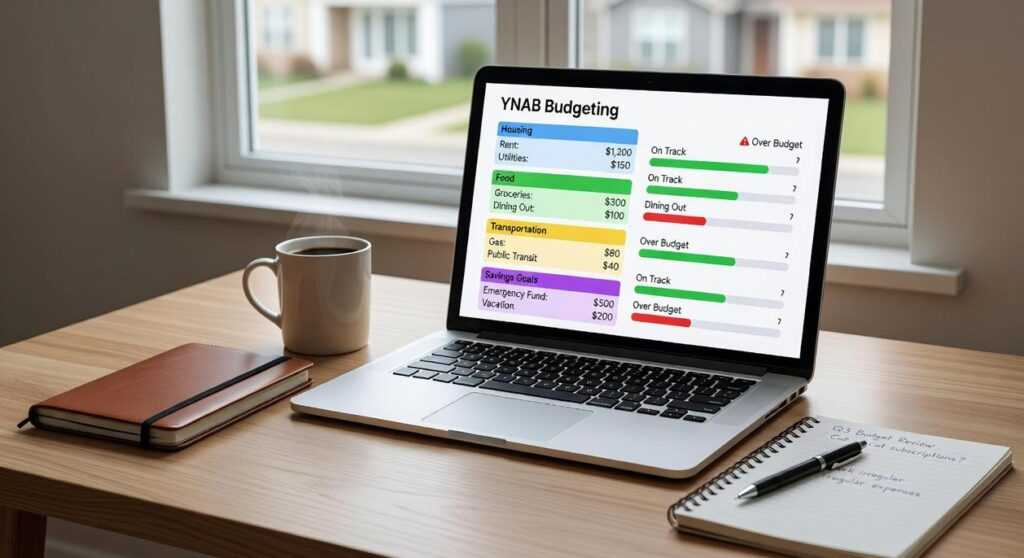
“I thought I was bad with money,” one user told me. “Turns out, I just didn’t have a plan.” That’s the heart of YNAB (You Need A Budget)—a zero-based budgeting system where every dollar is assigned a specific role before you spend it. Zero-based budgeting means your income minus your planned expenses equals zero. Nothing floats around “unassigned” (because idle money has a funny way of disappearing).
YNAB is built for people who want control, not guesswork. Its goal-setting tools let you break large expenses—like a $1,200 holiday fund—into manageable monthly targets. According to YNAB, new users save an average of $600 in their first two months (YNAB internal survey data). Skeptics argue that’s marketing fluff. Fair. Results depend entirely on consistency.
Still, compared to a casual budgeting apps comparison, YNAB feels more like a financial boot camp than a tracker. “It’s a lot at first,” another user admitted. And yes—the learning curve is steep, and the subscription fee can sting.
But for families serious about creating a family budget that actually works, that structure is the point. (Freedom through rules—who knew?) If you’re ready to stop reacting and start directing your money, YNAB delivers.
For the Automated Aggregator: A Look at Monarch Money
Monarch Money is best understood as a FINANCIAL DASHBOARD. A dashboard, in this context, means a single screen where all your accounts—checking, savings, credit cards, loans, and investments—are automatically synced and displayed in real time. Instead of manually entering transactions, the app pulls data directly from your banks (a feature called bank connectivity).
Here’s what that really means in practical terms:
- You link your accounts once.
- Transactions flow in automatically.
- You log in and see your full financial picture.
It’s “set it and see it” rather than “set it and tweak it daily.”
Some people argue that without a strict budgeting methodology—like zero-based budgeting (where every dollar is assigned a job)—users won’t change bad habits. That’s a fair concern. Monarch is more about awareness than discipline. But for many users, clarity drives behavior. When you can SEE your net worth and cash flow in one place, patterns become obvious (and sometimes uncomfortable).
Compared to tools highlighted in any budgeting apps comparison, Monarch stands out for its clean interface, strong investment tracking, and collaborative features for couples. The trade-off? It’s a premium subscription after the free trial.
If you want simplicity, automation, and a comprehensive overview—not constant manual input—this tool fits the bill.
For investors who care more about performance than penny-pinching, Empower’s Personal Dashboard feels like a control center. Have you ever wondered whether your retirement plan is actually on track, or if hidden fees are quietly siphoning returns? That’s where this free platform stands out.
First, it excels at what long-term investors value most:
- A net worth tracker that aggregates accounts.
- A best-in-class retirement planner, meaning a simulation tool that projects income based on savings rates and market assumptions.
- An investment fee analyzer, which flags expense ratios and fund overlap.
In other words, it helps you see the big picture without paying a dime. (Not bad for a “free” dashboard.)
However, some users argue the budgeting features lag behind dedicated tools. They’re not wrong. Compared to specialized apps, cash flow categories and customization feel lighter. If you’re hunting for granular envelope-style tracking, you might notice gaps.
Still, ask yourself: do you want spending charts, or clarity on whether you’ll retire comfortably?
There’s also the tradeoff: outreach about paid wealth management services. For some, that’s a nuisance; for others, it’s a fair exchange for analytics.
If your priority is portfolio oversight, this budgeting apps comparison clarifies where Empower shines.
Choosing a financial partner isn’t about features; it’s about fit. After three months of testing tools, one pattern became clear: clarity beats complexity.
First, ask who you are right now. Are you a hands-on planner who wants to assign every dollar a job with YNAB? An automated tracker who prefers Monarch to sync accounts and surface trends? Or an investment-focused aggregator who leans toward Empower for net-worth tracking?
Some argue that switching apps every year keeps you optimized. In reality, hopping creates friction and logins. The biggest mistake isn’t picking the “wrong” tool—it’s not picking at all. Financial drift, where spending goes unchecked for months, costs far more than any subscription.
So here’s the move. Review one budgeting apps comparison, choose the app aligned with your goal, and commit to a 30-day trial. Connect accounts. Check it weekly.
the budgeting application is the one you use. turns stress into control.
You came here looking for clarity in your financial life — a way to stop second‑guessing your spending, second‑guessing your strategy, and wondering where your money is really going. Now you have a clearer path forward.
Financial stress doesn’t come from a lack of effort. It comes from a lack of structure. Without the right systems, even smart, capable people feel stuck, overwhelmed, and behind. The good news? That cycle can change the moment you apply the right principles and tools consistently.
The next step is simple: take action. Review your current spending habits, apply foundational finance principles, and use tools that align with your goals — including a thorough budgeting apps comparison to find the one that fits your lifestyle. Then implement what you’ve learned.
Take Control of Your Financial Direction Today
If you’re tired of feeling like your money is controlling you instead of the other way around, now is the time to act. Thousands have already transformed their financial direction by applying structured portfolio strategies, disciplined budgeting systems, and proactive tax planning.
Start today. Put the right systems in place. Strengthen your financial foundation. And move forward with confidence knowing you’re building a smarter, more secure future.